Roads, Bridges, and Minds: The Hidden Infrastructure of Healing
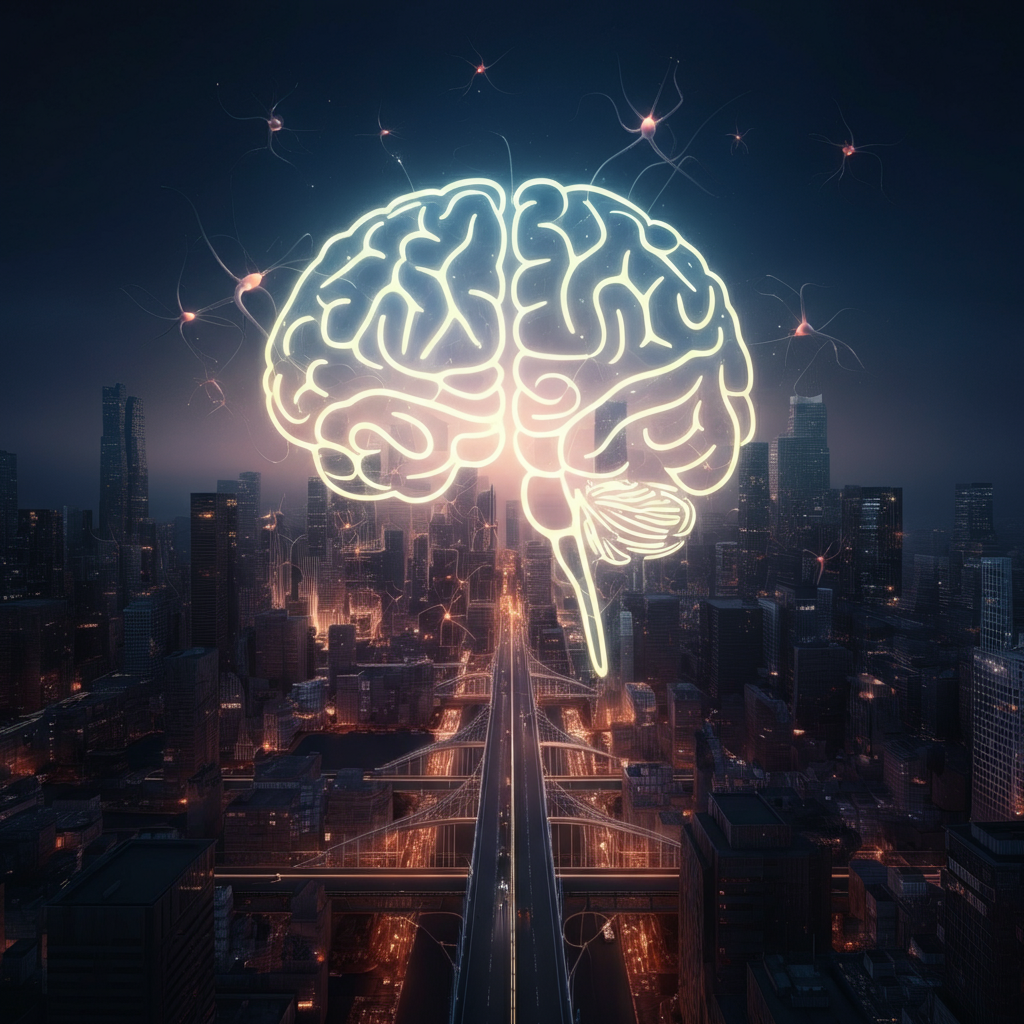
After attending the 2025 International Society for Neuroregulation and Research conference in Niagara, NY, I wanted to compose an essay that focuses on the mental health aspect of my upcoming book, The Dream of Matter. While metaphysics and social commentary are fun to write about, I feel like mental health is the bridge that makes the book relevant to every one of us.
This essay is a synthesis of a few chapters from my manuscript.
When I first began studying neuroscience, it was for a selfish reason. My own attention was slipping, scattered under the pressures of Silicon Valley. Long days, relentless streams of data, endless context-switching. I thought if I could tune my brain, maybe I could stay competitive, sharper, and more focused.
But the deeper I went, the stranger it became. I discovered a field few people even know exists: neurotherapy, the art and science of training the brain’s rhythms and circuits directly. It promised something radical—not just coping strategies, not just medications to mute symptoms, but the chance to help the brain unlearn its maladaptive loops and rediscover its natural flexibility.
That word, flexibility, became a touchstone for me. A healthy brain is one that can recruit neurons when needed and let them rest when finished. An unhealthy brain is one that gets stuck—parts overfiring or underfiring, talking too much or too little to each other. Symptoms are not random defects. They are the signatures of a rigid brain.
Maladaptive Neuroplasticity
Brains learn. That is both their glory and their curse. We all know this from experience: habits form quickly, and sometimes the wrong ones stick. Under stress, trauma, or illness, the nervous system adapts by learning survival strategies—hypervigilance, numbing, dissociation. These aren’t mistakes. They’re brilliant adaptations in the moment. But like survival gear worn long after the storm has passed, they become burdensome.
Neurotherapy steps in as a kind of teacher. There are two main modes: neurofeedback, which reflects the brain’s own activity back so it can adjust itself, and neurostimulation, which provides gentle signals the brain can mimic and internalize. In both cases, the nervous system is practicing new rhythms until they feel natural. Over time, it remembers what it had forgotten: how to shift gears, how to rest, how to let go. What might take years of talk therapy—slowly circling insights, waiting for them to filter into physiology—can sometimes change in weeks when we work directly with the circuitry.
But these methods aren’t replacements for therapy; they’re complements. Many of my clients are already working with therapists and come to me for added support with symptom relief. In fact, some arrive because their therapist recommended neurotherapy. Talk therapy helps process meaning and relationship; neurotherapy helps reset the nervous system. Together they reinforce each other.
And because the process is scalable—computers can track signals, algorithms can guide training—it holds potential to transform mental health care at a speed and scale we’ve barely imagined.