The Quantifiable Soul and the End of Spiritual Vagueness
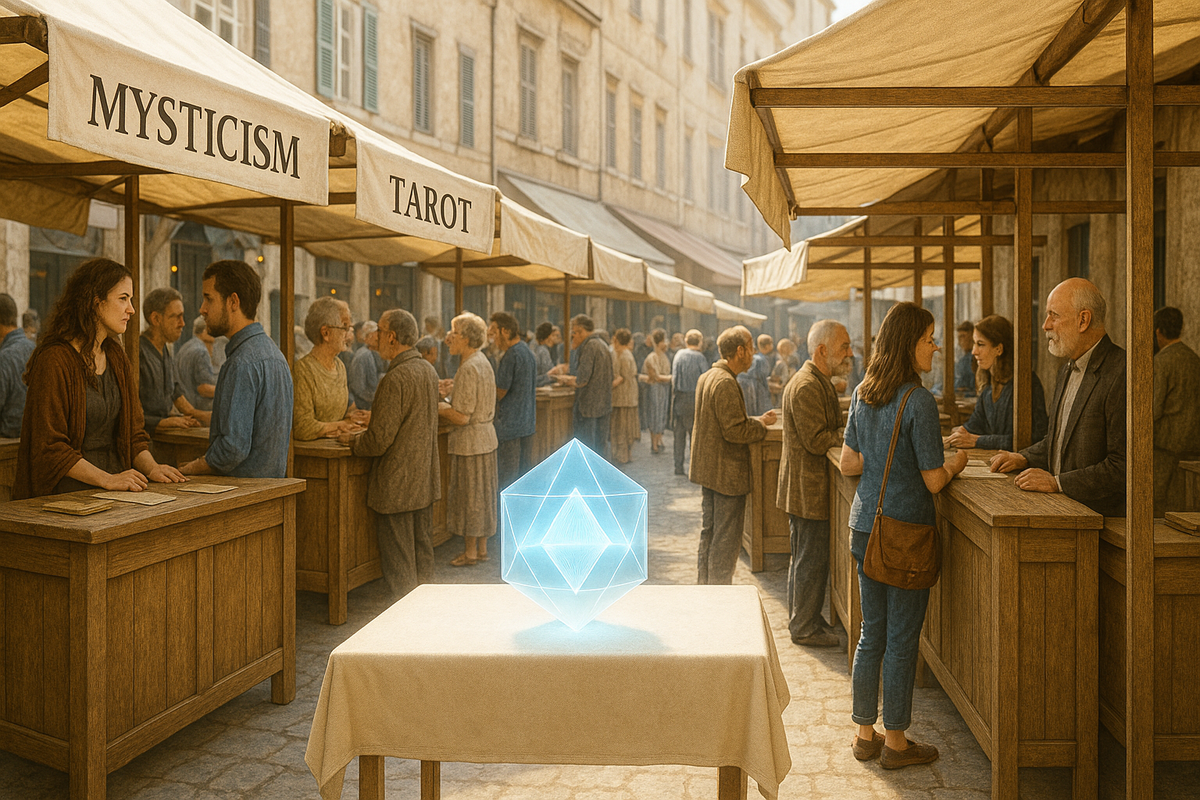
Oh, the irony. Spirituality claims to be about the soul, and yet, very few spiritual systems can actually define what the soul is—let alone describe how it works or offer a way to verify its existence.
But imagine, just for a moment, what would happen if someone could. What if there were a precise, mathematical explanation of the soul? A way to reveal its mystery, to understand it, even to measure it? Would this be the greatest breakthrough in the history of human spirituality—or the most destabilizing threat to the sprawling spiritual-industrial complex?
When I first encountered Ontological Mathematics, I was stunned. This wasn’t just another theory or spiritual philosophy—it was a rational system grounded in mathematical necessity. It offered a proof, not just a poetic metaphor, of how the universe works, what the soul is, and what our role is in the cosmic cycle of becoming. If you believe that the soul is real and worth understanding, then this is the mic drop you’ve been waiting for.
And yet, despite over 200 books and what must amount to tens of millions of words of highly developed reasoning, these ideas remain mostly ignored. In some cases, they’ve been picked up by fringe personalities—people who try to rebrand the work to serve personal ambitions, which often does more harm than good. In other cases, the work has remained inside its own intellectual bubble, with most of the discussion happening among students of the material. It hasn’t yet found its way into the mainstream.
This strikes me as bizarre. If we’re serious about spirituality, and if the soul is our central concern, shouldn’t a rigorous, coherent theory of the soul be headline news? Shouldn’t it be the most exciting development in spiritual history? And yet it’s met with silence, or worse, indifference.