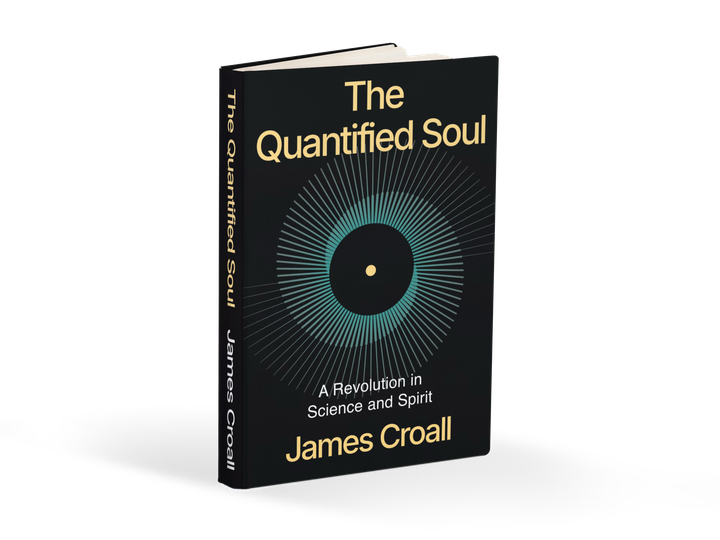
What is your soul made of?
Most spiritual traditions have some notion of what the soul is—or some go so far as to declare there is no soul at all. But defining what the soul is made of becomes a challenge. We might hear it has various layers, but then, what are those layers made of? Or that it’s composed of frequencies—but what, in turn, are those frequencies?
In trying to understand the soul—or anything immaterial—our senses fall short. We often run out of answers and turn to miracles or magical thinking for explanations. As a result, we’re frequently told that these mysteries can’t be understood rationally or, perhaps, can’t be understood at all. Isn’t it the height of arrogance to assume that something must be inherently unknowable simply because we have yet to figure it out?
Infinity provides a compelling example of how we often mistake our own limitations for universal truths. Philosophers like Hegel distinguished between “bad infinity”—an endless, unresolved accumulation that leads nowhere—and “good infinity,” a self-contained, complete whole that resolves contradictions. By embracing mathematical reasoning, we can transcend the constraints of sensory perception and begin to uncover the structured, infinite nature of the soul.
Please note that this content is free, and only requires a free subscription to view.