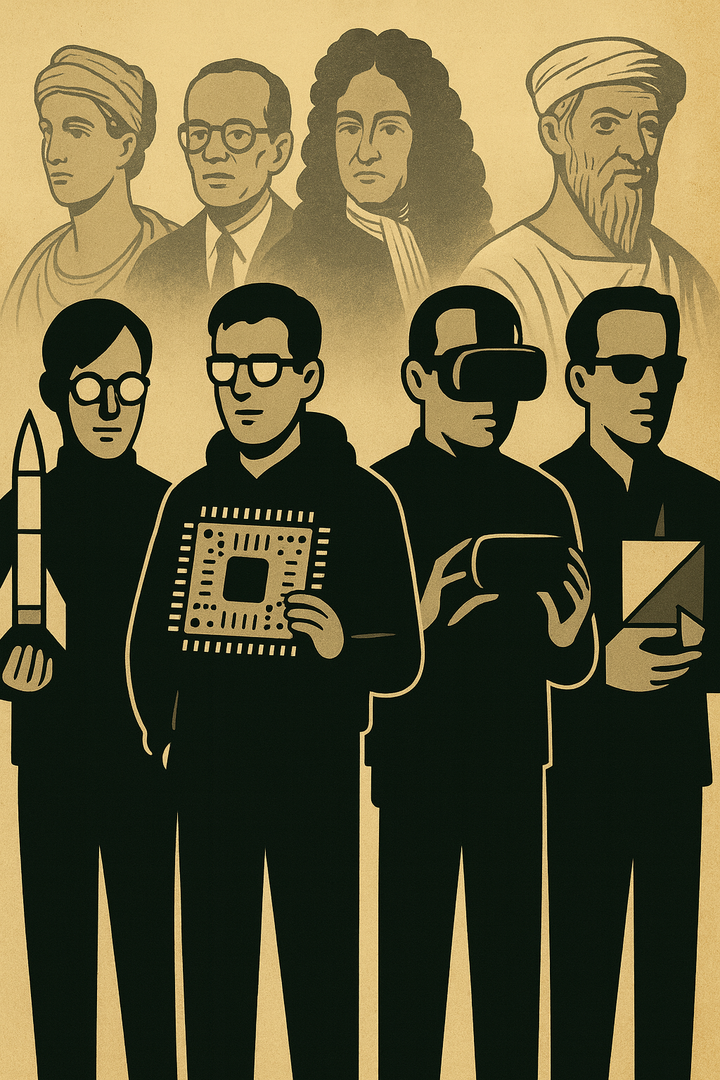
Why Biohacking Needs a Soul
Hacking biology was only the opening act
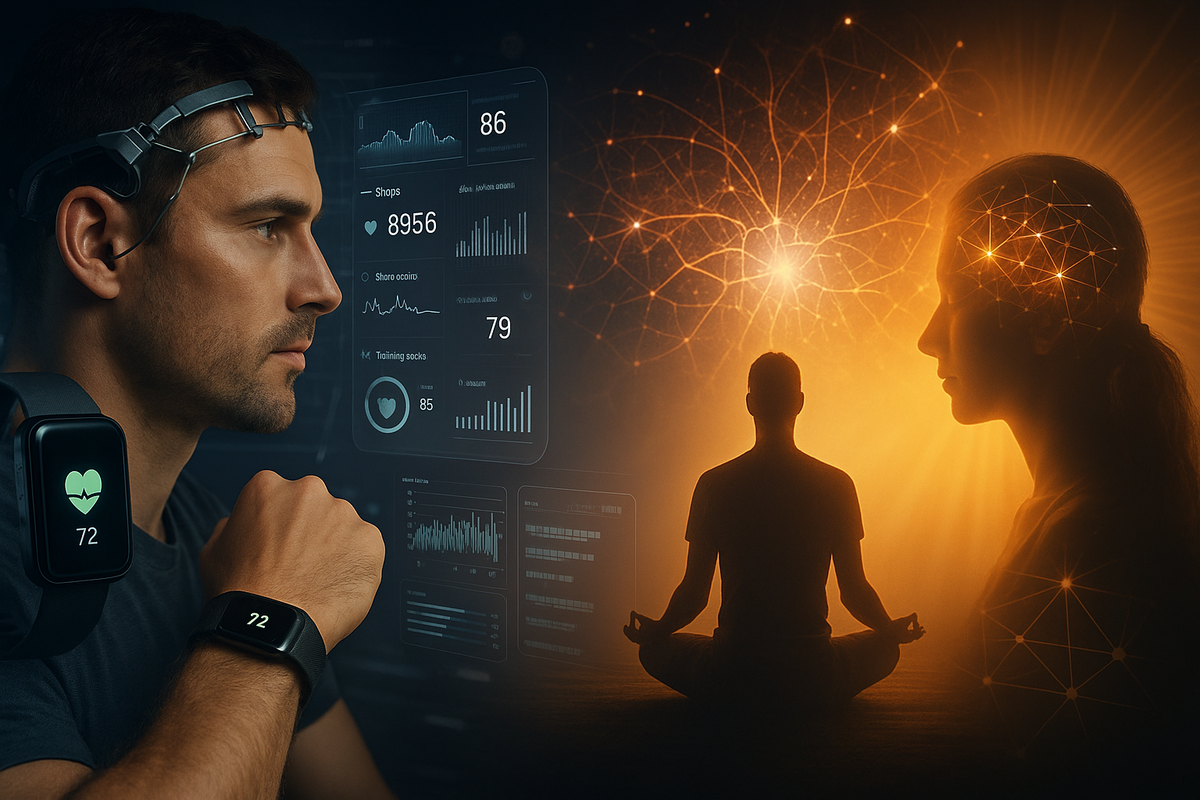
Your wrist buzzes. The screen lights up. A number tells you how well you’ve slept, how hard you’ve trained, how ready you are to begin again.
Behind every metric is the same impulse that started it all: the belief that life can be understood, adjusted, and improved.
Biohacking began as an act of defiance and wonder—a generation who refused to accept that biology was a fixed script. We asked a radical question: What if I could work with my own system the way an engineer works with code? Out of that question came a culture of experimentation: sleep optimization, cold exposure, peptides, neurofeedback, red light, breathwork, and more. What had once been the guarded territory of research labs became a playground of personal agency. The machinery of life was no longer just observed; it was adjustable. Hackable.
That was the promise—power returned to the individual—and it delivered. The movement made wellness empirical. It taught people to think in feedback loops, not fate. It birthed a new literacy of self-regulation and an extraordinary wave of innovation in how we eat, move, rest, and heal.
But we’ve outgrown the question that launched the movement. When everything can be optimized, the question becomes: optimized for what? We can improve performance, longevity, and recovery, but do we know what we’re performing, living, or recovering for? The tools are astonishing; the direction is unclear. The world, brilliant at measurement, seems to have misplaced its meaning. We have dashboards for everything except purpose.
That is not a failure of science. It’s a symptom of something deeper—a civilization that can track every metric except the reason it exists. We have a crisis of purpose, not potential. The way through begins with a harder question: what, exactly, are we?
The body was never the whole story
Early biohackers treated the body like the first frontier—because it was. We took ownership of processes long surrendered to medicine and chance. There was courage in that, and joy. Yet as our bodies became a platform for endless iteration, something shifted. The pursuit of better living sometimes began to resemble self-surveillance. We measured everything measurable and started to mistake the instrument for the music.
But the body has never been the whole story. It is the visible half of an invisible equation, the expression of something prior. When we focus entirely on the hardware, we forget the code it runs—the layer of mind that coordinates the system.
In technology circles we rarely stop to ask the hardest question of all—what does it actually mean to be human? We prefer what can be observed, measured, and optimized. The solvable feels safer than the mysterious. In an age building artificial minds, we still haven’t agreed on what a real one is. Ask about consciousness and the conversation grows quiet. Are thoughts convenient accidents of electricity? Is free will an elegant illusion? Or does mind precede matter the way mathematics precedes physics?
These aren’t idle questions. They define what “optimization” can even mean. If the mind is nothing but chemistry, the game ends at chemistry. But if the mind is something more—organized, intentional, self-directing—then the body is not the master plan. It’s the interface.