You Can Handle the Truth
“The advanced atheist… understands the world as it is—an infinitely cold universe of protons and electrons. To the advanced Christian, God’s will is just as cold and his justice just as inexorable.”
—Curtis Yarvin, You Can’t Handle the Truth
A small but influential current calling itself the Dark Enlightenment has gathered a following among those disillusioned with modern life. It speaks in the language of realism—tough-minded, unsentimental, allergic to idealism. Its thinkers, Curtis Yarvin among them, draw inspiration from Robert Michels’ Iron Law of Oligarchy: the claim that every organization, however democratic its origins, eventually concentrates power in the hands of a few. Hierarchy, in this view, is not corruption—it’s gravity. Power condenses; freedom evaporates.
Extend that logic far enough and it becomes cosmology: a universe where order can exist only through domination, and decay is the only certainty. To many, this sounds like honesty—the courage to face the world as it is. But what passes for realism here is really fatalism. It’s the conviction that cooperation is naive, that coherence is impossible, and that control is the only kind of order that works.
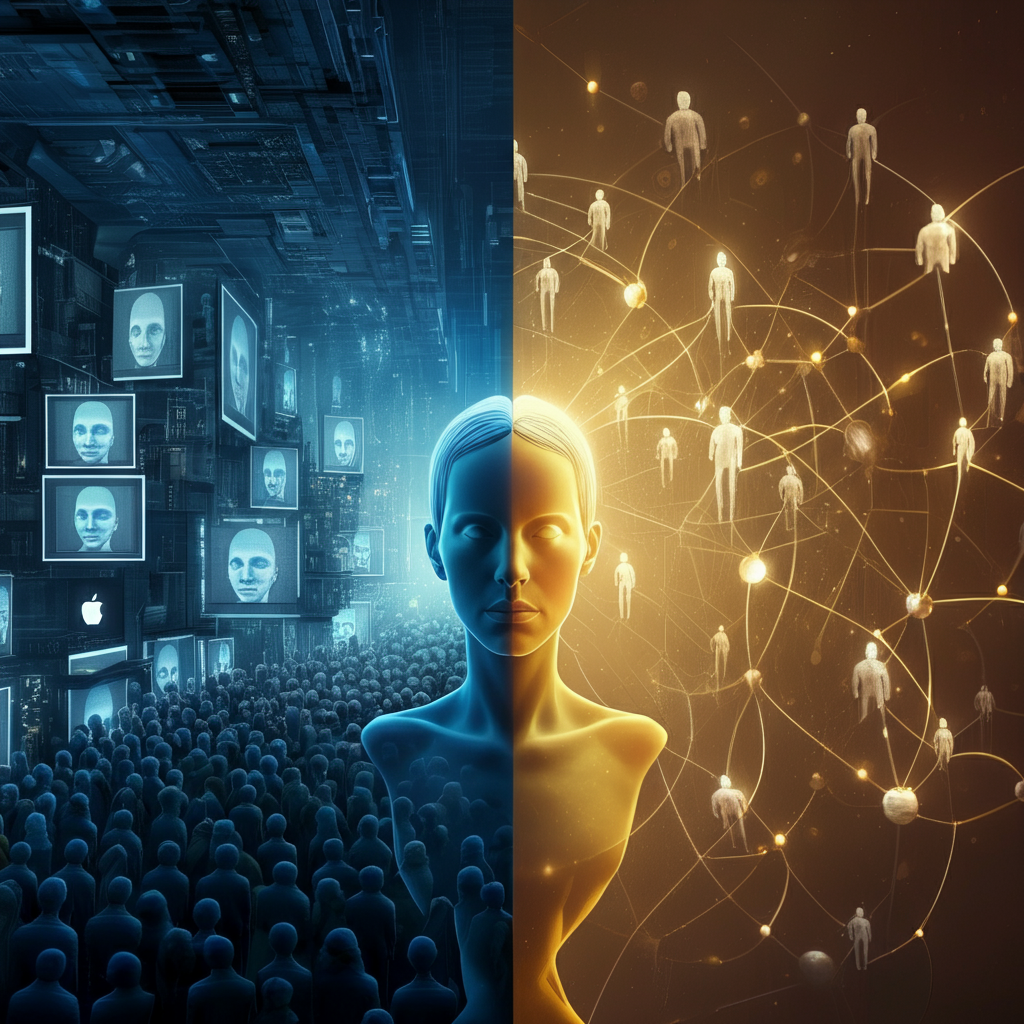
The real story may be simpler, and harder: we’re living through a crisis of coherence—a breakdown in our ability to think, feel, and organize together as wholes. Our brains fragment under stress, our politics mirror the same fragmentation, and our culture’s stories no longer line up with lived experience.
By coherence I mean the simple but vital ability of parts to hold together as a whole—a self not at war with itself, a society able to disagree without disintegrating, and a culture whose stories still make sense. Once that fabric begins to fray, everything else starts to unravel. In mental health this shows up as symptoms: the brain’s networks stop communicating, thought becomes scattered, and emotion and reason pull in opposite directions. The same thing happens in nations when dialogue collapses and trust disappears. The health of any system—neural or social—depends on its ability to cooperate. Coherence is that cooperation, the hidden infrastructure of health.
Please note that this content is free, and only requires a free subscription to view.