The Kids Aren’t Alright: A Riff on the Rescue That Isn’t Coming
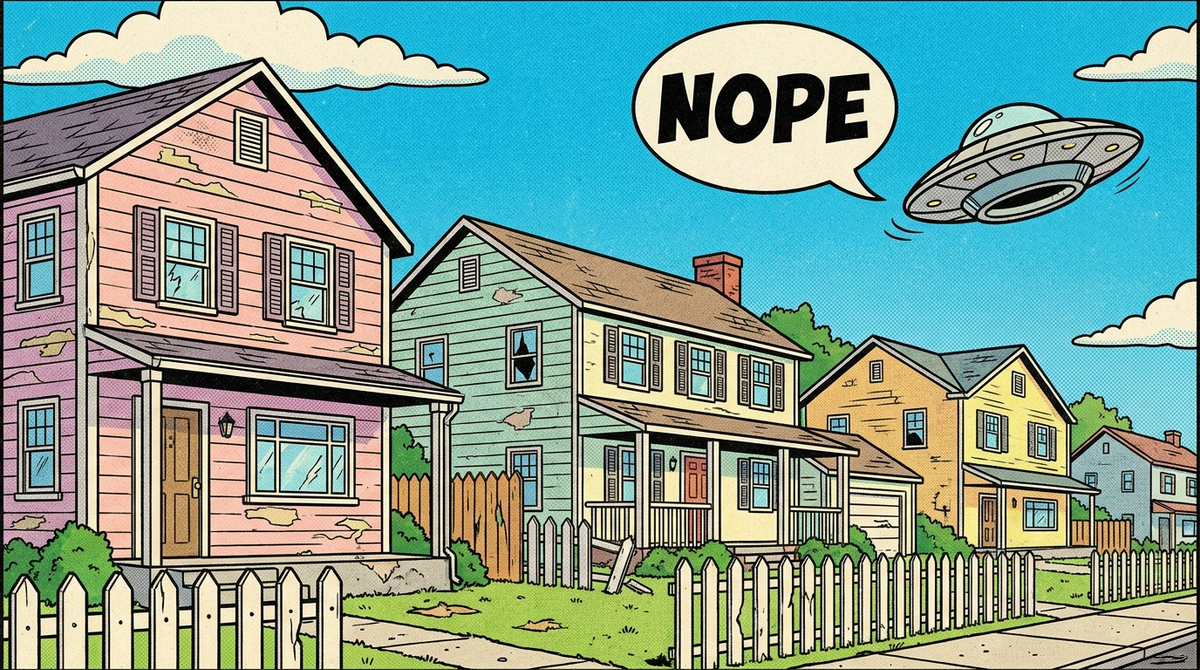
Here’s another just-for-fun essay. Background: part of my creative process is letting my unconscious draw me to a song. I know it when there’s a ping—the song just won’t let me go. I sit, listen on repeat, and stream-of-consciousness whatever it makes me think and feel. Sometimes an essay falls out. This was one of those times. I like to think it’s good exercise for tapping into other parts of myself—or what a friend of mine calls the epiphanic field.
We grew up inside a promise nobody admitted was a promise.
The future gets better. Not might—does. Each generation inherits more, knows more, suffers less. Progress is the current, and you don’t have to row. Just stay in the boat. We breathed it in. Nobody made us sign anything. It just became the shape of what we expected.
The Offspring put that promise in the first line of a song and spent three minutes tearing it down.
When we were young the future was so bright.
The title’s a flip. The Who, 1965: The Kids Are Alright. Confident. Generational. An older optimism announcing itself. Thirty years later the answer comes back and changes one word, and the one word is the whole argument.
So I’m riffing here. Because once I heard the kids as bigger than some suburban cohort, the song rearranged itself.
What if the kids are us? The species that was told it was going somewhere.
The Bright Was Real
The opening isn’t ironic. That’s the trap. The brightness was real.
The old neighborhood was so alive / And every kid on the whole damn street / Was gonna make it big and not be beat.
Not naivety. Potential, perceived accurately. The kids really had it. The street really was alive. None of it was a lie—which is exactly why the rest guts you. The dream was true and still didn’t arrive.
Capacity isn’t outcome. Being able to make it isn’t making it. We forget this constantly. We treat potential like a guarantee, like having the spark obligates the universe to fan it.
It doesn’t. The universe owes you nothing.
One Little Street
Then the turn.
Now the neighborhood’s cracked and torn / The kids are grown up but their lives are worn / How can one little street / Swallow so many lives?
One little street. A small thing. A closed system, a set of conditions nobody picked and most couldn’t escape. And it swallowed people. Not in a flood. One at a time, quietly, while the big story kept promising the arc bent up.
That question isn’t rhetorical. It’s a worldview hitting evidence it can’t digest. If the future’s automatically bright, how does one ordinary street eat this many futures? The math doesn’t work. The promise was wrong.
The Names
Then the move that makes it unbearable. The song stops abstracting.
Jamie had a chance, well, she really did / Mark still lives at home because he’s got no job / Jay committed suicide / Brandon O.D.’d and died.
Names. Not statistics—names. The promise doesn’t fail to a demographic. It fails to Jamie. To Mark. To Jay. To Brandon. One person at a time, each holding a chance they really did have. That’s how the abstraction cashes out: specific lives, specific rooms, specific phone calls nobody wanted.
I sit across from these people. The chance was real. The capacity was real. And the conditions that turn capacity into a life weren’t there—weren’t built, weren’t tended. The potential was never the problem. The tending was.
What the hell is going on?
The Rescue Fantasy
Here’s what I can’t get past. We don’t answer the ache. We invent rescue. The cavalry’s coming—it just keeps changing costumes.
For the tech crowd, the cavalry wears a lab coat. Exponential technology will save us. The optimists at the top say it loudest—and notice where they’re standing. The part of the street that never cracked. Doubt the bright arc and they’ll tell you you’re just wired for pessimism, a glitch in the meat. Sure. Or maybe that’s just what the data looks like from the streets they never had to live on.
For the spiritual crowd, the cavalry wears a starship. We’re all about to ascend to fifth density. The ETs are inbound to enlighten us. Some higher intelligence is on its way to fix what we couldn’t.
What kind of delusion does that take? Think about the arrogance of it. We can’t keep one little street from swallowing its own children, and we think we’re about to graduate to a higher plane. Ever consider we’d have to enlighten ourselves before anyone—human, machine, or otherwise—would even bother taking the call? That a species this incoherent doesn’t get contacted, doesn’t get ascended, doesn’t get saved? That the rescue doesn’t come precisely because we keep sitting around waiting for it?
Lab coat or light body, it’s the identical move. Outsource the work to a savior who’s always almost here. Someone’s coming to make it bright. I just have to wait.
And then there are the ones who quit waiting. Who say it flat: there’s no cavalry, the work is ours, start now. They’re never the loud ones. They’re the only ones building anything real. Those are the people I trust.
Nobody’s coming. That’s not the bad news. That’s the only news that ever set anyone free.
Nothing’s Free
The chorus already said it, before a single name.
Chances thrown / Nothing’s free.
Nothing’s free. The whole correction in two words. The bright future was never the default setting of the universe. Brightness is conditional—on attention, on structure, on somebody doing the work of holding the thing together. Coherence isn’t handed down. It’s built, tended, re-tuned, generation after generation, or it rots into cracked and torn. A street, a life, a mind, a civilization—none of them hold because the cosmos owes it. They hold when something keeps them in tune.
And don’t mistake this for despair. The optimist promising a bright arc and the doomer promising collapse are running the same con—both swear the ending’s already written, the outcome out of our hands. It isn’t. That’s what nothing’s freeactually means. Not “we’re doomed.” It’s on us.
Hard to See
Still it’s hard / Hard to see / Fragile lives, shattered dreams.
The song doesn’t resolve. It circles the wreckage and refuses to look away, and that refusal is the most honest thing in it. No bridge where it turns around. No key change into redemption. It sits in the hard to see and makes you sit there too.
But sitting there is the wake-up. The kids aren’t alright is the sentence you have to say out loud before anything changes—because as long as you believe the arc bends up on its own, or that someone’s coming to bend it for you, you’ll wait forever. The rescue isn’t inbound. It never was. Whatever brightness gets built, we build—on purpose, one tended life at a time.
The kids aren’t alright.
That’s not the end of the story. It’s the first true thing in it.
Lyric excerpts from "The Kids Aren't Alright" written by Dexter Holland, performed by The Offspring (from the album Americana, 1998). Used here for purposes of commentary and analysis.


Comments ()